The Program
25 lessons, five weeks of five. Each lesson runs 45 minutes in the same six-block shape.
What a lesson looks like
Every one of the 25 lessons has the same shape.
- Transition and grip clinic 0:00-0:05. Students collect their instrument from the stand, take their place in the horseshoe, and check the pendulum grip
- Conceptual hook 0:05-0:10. You deliver the day's idea in two minutes: a postcard from West Java, a physics fact, a word
- Kinetic warm-up 0:10-0:15. A drill without notation: the Living Scale, the Ping-Pong, a hand-sign follow-the-leader
- Core skill drill 0:15-0:35. The day's real work: reading, rehearsing, sectionals, the backing track
- Performance polishing 0:35-0:40. The same material off the page, eyes on the conductor
- Synthesis and teardown 0:40-0:45. One exit-ticket question, instruments back on the stand, silence on the way out
25 lessons, five weeks of five
A daily block over 5 weeks, weekly over a semester of 25–27 weeks, or an express unit of Lessons 1–5.
Lessons 1–5, the express unit, are underlined in yellow. NGSS marks a lesson that meets a science standard as written; C3, one that names the C3 Framework for social studies. Every lesson names two anchors of the National Core Arts Standards for Music.
One note per child
Each angklung sounds one pitch, so a melody passes from hand to hand around the room: a hocket. The cooperative word for this is gotong royong.
Nobody in your room can play a melody alone.
The repertoire
The repertoire: 11 songs
- Four originals: The Raindrop Pulse, The Living Scale, The Ping-Pong Bounce, Conductor Says
- Three public-domain tunes: Twinkle, Twinkle, Little Star; Ode to Joy; Simple Gifts
- Three Indonesian traditional songs: Cing Cangkeling (Sundanese), Suwe Ora Jamu (Javanese) and Jali-Jali (Betawi), credited to their communities as traditional cultural expressions, with arrangements by the author
- The Big Medley Mix
- The Raindrop PulseOriginal · 80 BPM
- The Living ScaleOriginal · 90 BPM
- The Ping-Pong BounceOriginal · 100 BPM
- Twinkle, Twinkle, Little StarPublic domain · 85 BPM
- Ode to JoyPublic domain · 108 BPM
- Simple GiftsPublic domain · 95 BPM
- Cing CangkelingSundanese traditional · 100 BPM
- Suwe Ora JamuJavanese traditional · 90 BPM
- Jali-JaliBetawi traditional · 108 BPM
- The Big Medley MixOde to Joy and Jali-Jali · 108 BPM
Where it comes from
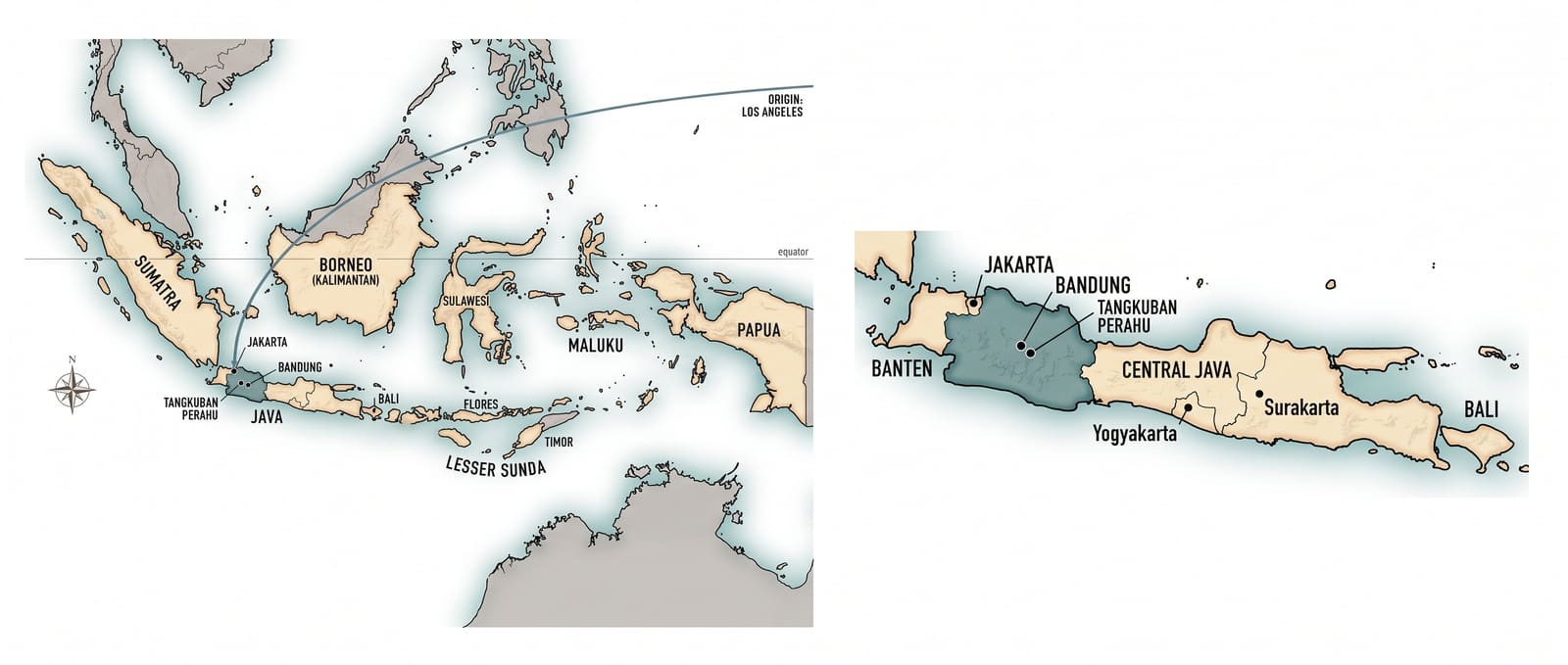
- 1938 Daeng Soetigna, a schoolteacher in Kuningan, West Java, tuned the angklung to the Western scale so his pupils could play the songs they knew.
- 2010 On 16 November 2010 UNESCO inscribed the angklung on the Representative List of the Intangible Cultural Heritage of Humanity.